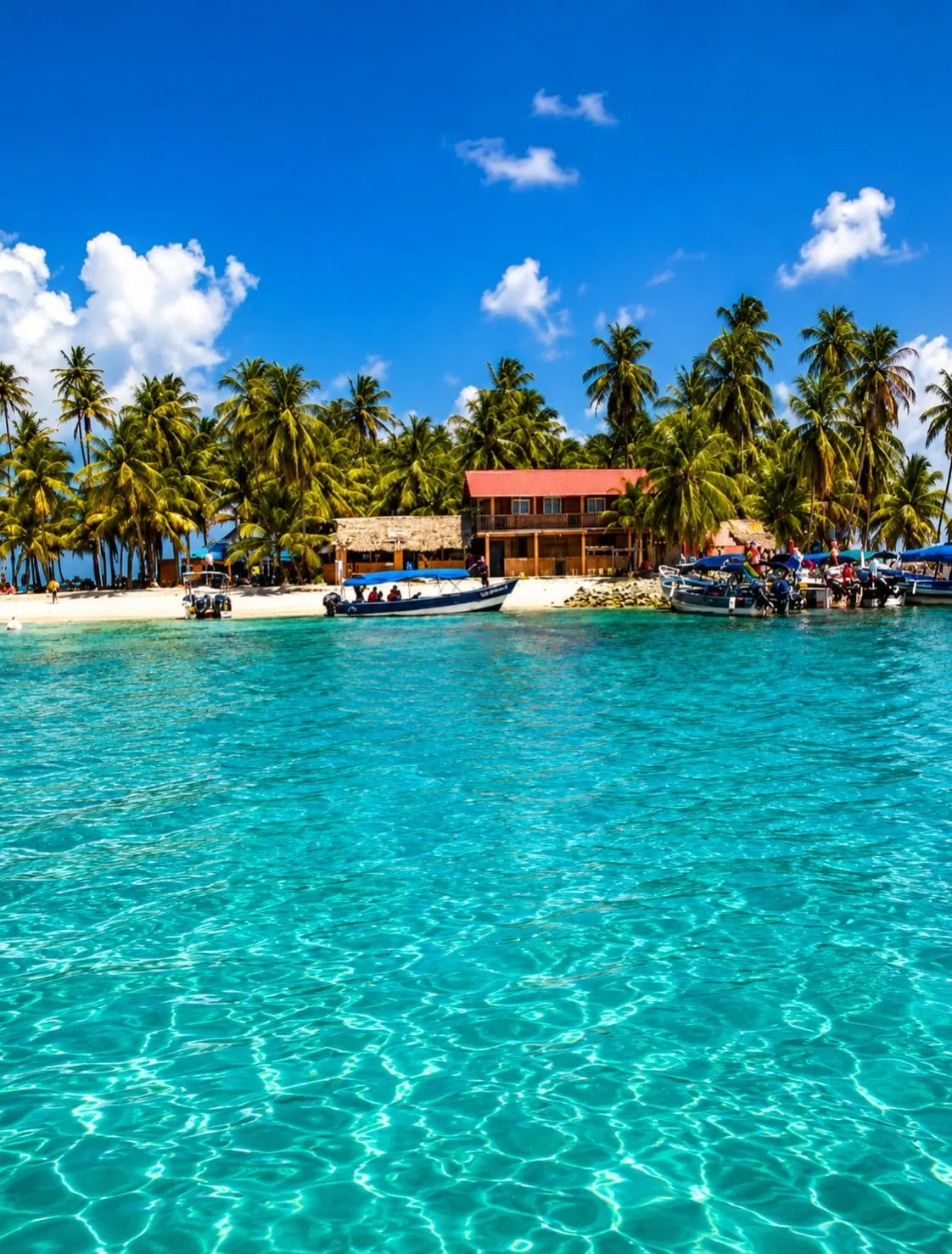
Not sure which island to choose? Good news: almost all of them are equally stunning — white sand, palm trees and turquoise water. Our tours visit several in a single day, and if you're dreaming of one in particular, tell us when you book and we'll do our best to stop there.
A small cay in Cayos Limones, the group closest to the port. Its Guna name is Assudub Bipii, and there is a Perro Grande that is not the same island.
See the island page →Niadub in Guna. It sits in Cayos Limones, a few minutes by boat from Perro Chico, which is why almost no itinerary visits it alone.
See the island page →Gorginega. It sits on the edge of Cayos Limones, and that position puts it both in its own group's routes and in those crossing west.
See the island page →Iggodup, in Cayos Limones. Uninhabited and without lodging: you pass through, you do not sleep there.
See the island page →A small cay in Cayos Limones, off the group's busiest stops.
The larger of the two Perro islands, in Cayos Limones. More ground and more shade than Perro Chico, with which it is constantly confused.
See the island page →It gives the whole Cayos Limones group its name. More a navigation reference than a beach destination.
An inhabited Guna community, with cane houses beside the water and wooden canoes moored at the door.
See the island page →Two twin islands in the west of the archipelago, with a sailing anchorage. Also spelled Chichime and Chichimei depending on the map.
See the island page →Tubasenika in Guna, in the west. An island with simple lodging, the kind you stay on rather than just pass through.
Narasgandubb Bibbi. A western island with Guna community cabins: it is a lodging option, not just a visit.
A western cay, in the same area as Chichime and Franklin, and among the least travelled of the group.
A western cay with shallow water, next door to Coco Blanco.
A minimal western cay with no inhabitants and no services. Not to be confused with Cayos Coco Bandero, another group in another area.
It lies in Cayos Holandeses, the group furthest from the coast and the one with the most open water in the archipelago.
A cay in the Holandeses chain. Being the outer group, it is among the first places a rough day at sea shows.
In Cayos Holandeses, the outer group. It owes its name to the starfish in its shallows.
Not an island but a group of cays, which is why the name is plural: the specific stop changes with the day and the tide.
One of the cays in the Coco Bandero group, and among the least visited in its area.
Narasgandup Bipii. An island with traditional cabins, the kind booked to spend the night in the comarca.
Kuanidup. A classic lodging island of the archipelago, the kind that turns up in two- and three-day stays.
Ariyaladub, in the archipelago's resting area, with a wide beach and no strong currents.
Yansailadup in Guna. It has an inner lagoon, something almost no other island in the comarca offers.
Asseryaladub. A cay in the resting area, with dense vegetation and low occupancy.
A small island of Guna families, the kind offering simple lodging inside the comarca.
A cay in the resting area with no shops and no services: what you bring is what there is.
A neighbour of Isla Yanis in the same area, with fewer people on it.
The archipelago's overwater cabin island: you can see it in a day or stay the night on it.
See the island page →An inhabited island of the comarca: here you see everyday Guna life, not a postcard beach.
The administrative seat of Guna Yala, with an airstrip and a museum. It is a gateway, not a beach destination.
Joined by a bridge to Corazón de Jesús. It is the largest and most westernised community in the comarca.
An inhabited community near El Porvenir, known for its molas.
An inhabited Guna community where you buy molas from the person who wove them. It is a stop on the multi-day routes.
See the island page →