By Ramiro Del Rio
Gardi Sugdub: The Guna Island That Moved to the Mainland
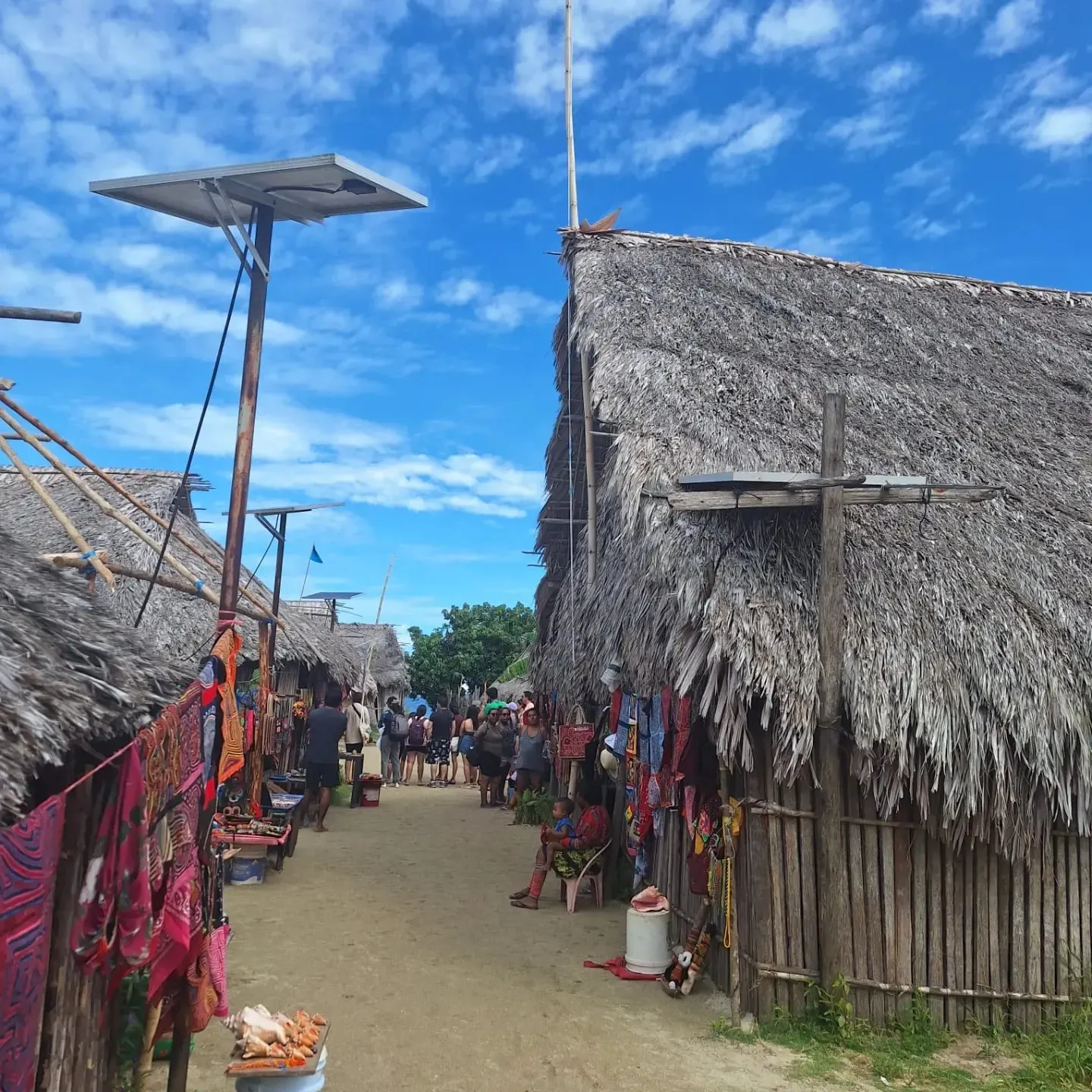
Gardi Sugdub is a Guna island off the Cartí coast whose residents moved to the mainland in June 2024. About 300 families, more than a thousand people, left an island roughly 400 by 150 metres, overcrowded and threatened by rising seas, to live in Isber Yala, a new neighbourhood built by Panama’s government.
A full island, and a low one
Gardi Sugdub (also written Cartí Sugdup or Cartí Sugtupu) lies just over a kilometre from the mainland, in the Cartí area. Before the move it was home to about 1,300 people, according to Human Rights Watch, on an area the organisation compares to five football pitches.
There were two reasons to leave, and they add up:
- No room. There was no space left for new houses. According to Human Rights Watch, the community had been asking for help to relocate since 2010.
- The sea. Most of Guna Yala’s islands sit about 50 centimetres above sea level, according to a climate-monitoring expert quoted by the AFP news agency. Steven Paton, of the Smithsonian Tropical Research Institute, projects a rise of about 80 centimetres by the end of the century if global temperatures climb 2.7 degrees above pre-industrial levels.
Gardi Sugdub isn’t an isolated case. Human Rights Watch estimates that 38 other communities in Guna Yala alone are facing rising seas and organising for a possible move.
The move in June 2024
Keys were handed over from 29 May 2024 and the move took place from 3 to 6 June, according to Panama’s housing ministry (Miviot), as reported by the newspaper Panamá América. The operation was named «Dulup», Guna for lobster, and used 30 boats and 30 pickup trucks, with support from the border service and civil protection: families crossed by boat to the port of Niga Kantule and continued by road.
Figures vary by source, and it’s worth saying so:
- The ministry allocated 300 homes and counted 1,351 people for the new neighbourhood, 495 of them minors.
- The Associated Press reported more than a thousand people moved; AFP said about 1,200.
- Not everyone left: around 200 people chose to stay in June 2024, according to AP, and a year later AFP counted about a hundred.
Isber Yala, the new neighbourhood
The neighbourhood is called Isber Yala (also written Isberyala or Isper Yala), a name Human Rights Watch translates as «Land of the Loquat Tree». It was first known as Nuevo Cartí. It sits on the mainland, in the Narganá district, about two kilometres inland: from the island it’s around 15 minutes by boat and five more by road, according to AFP.
What it has, according to the ministry and AFP:
- Homes of about 40 m², built of concrete and zinc, each with its own toilet and a plot to grow food. They are subsidised, so free for the families.
- Streets, pavements, power lines, a water system and playgrounds, plus a school, which moved over from the island.
- Space for a congress house and a chicha house, the community buildings found in any Guna village.
And what it lacked. In February 2024, Human Rights Watch warned that the site still had no adequate water, sanitation or health care. A year after the move, one resident told AFP she had electricity all day but water for only an hour each morning. The shift from cane house to cement house is explained in what a traditional Guna house is like.
What’s left on the island
Gardi Sugdub isn’t empty. In June 2025, an AFP report published by La Prensa described wood-and-cane houses locked with padlocks, others lent to people from neighbouring islands, and former residents coming back to check on theirs. The school was left with empty desks. The health centre, however, stayed on the island, run-down and without water, and its doctor was seeing fewer patients because they now have to come by land and sea.
The sources we consulted report no concrete plans for the island. How decisions like that are made in the comarca is covered in how Guna Yala governs itself.
What it means for travellers
If you visit San Blas on a tour, you pass close by: Gardi Sugdub lies off the Cartí coast, the port where the road ends and the boats leave for the islands. What that journey is like is covered in how to get to San Blas.
Three things to keep in mind:
- It isn’t a tourist island. It’s a community, with people who stayed and people who left. It isn’t somewhere to wander into, and photographing people means asking first.
- The tour islands are low too. The figure of about 50 centimetres above the sea applies to most islands in the comarca, not just the inhabited ones; how many there are is covered in how many islands San Blas really has.
- The entry fee goes to the comarca, the same one dealing with these relocations. How much it is and how to pay is in the Guna Yala comarca fee.
Frequently asked questions
Why did the people of Gardi Sugdub move? For two reasons that add up: the island, about 400 by 150 metres, had no room for more houses, and the sea threatens Guna Yala’s low-lying islands. The community had been asking for help to relocate since 2010, according to Human Rights Watch.
When did the Gardi Sugdub relocation happen? From 3 to 6 June 2024, according to Panama’s housing ministry. About 300 families crossed by boat to the mainland and settled in Isber Yala, a neighbourhood built by the government.
Do people still live on Gardi Sugdub? Yes. About 200 people chose to stay in 2024, according to AP, and AFP counted about a hundred a year later. Many houses are locked up, and the health centre still operates on the island.
Can I visit Gardi Sugdub on a San Blas tour? It lies off the Cartí port that tours pass through, but it isn’t a tourist island: it’s a community and not somewhere to wander into. If you want to photograph people, ask first.