By Ramiro Del Rio
What a Traditional Guna House Is Like in San Blas
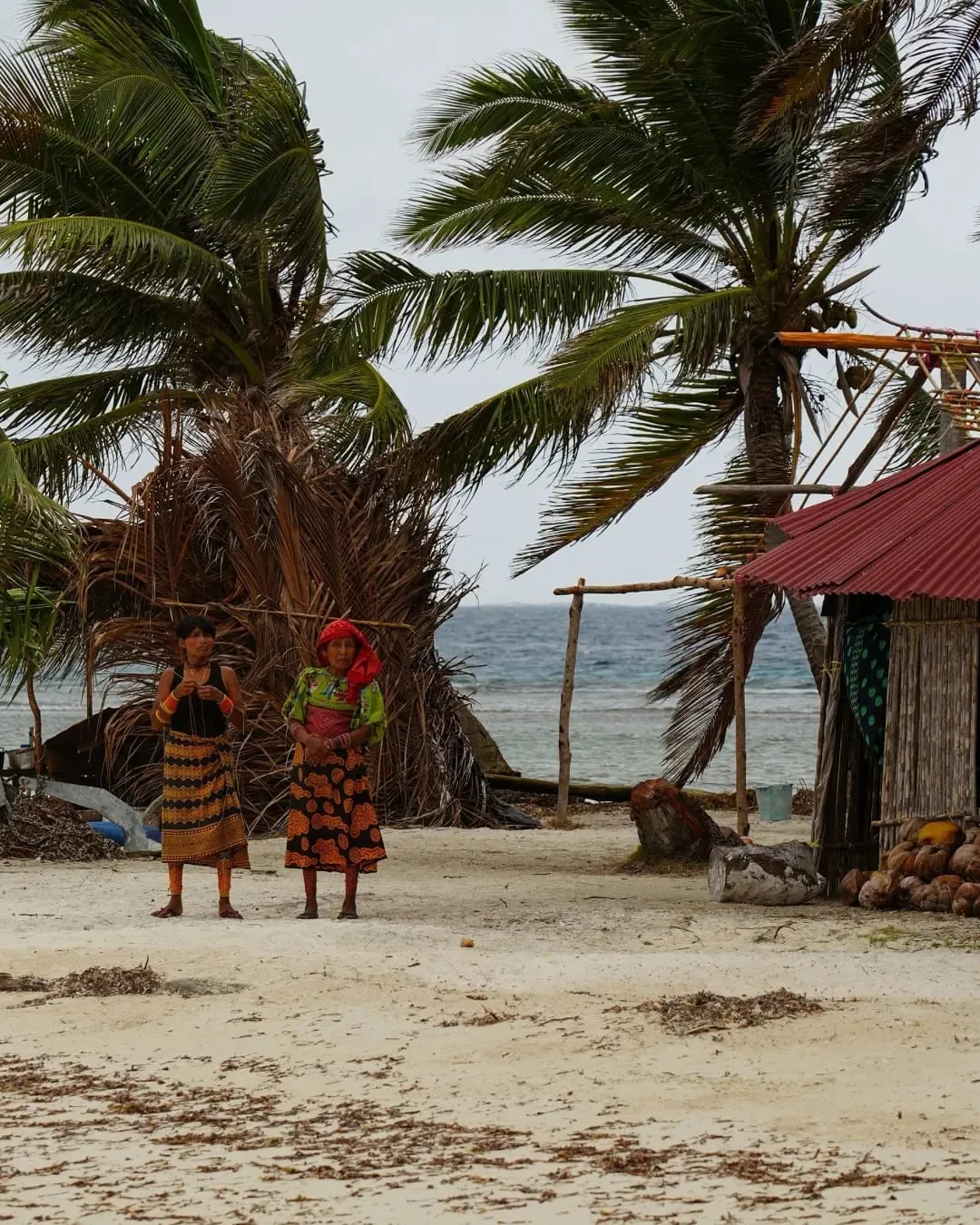
A traditional Guna house has cane walls, a palm-thatch roof and very little furniture: people sleep in hammocks slung from the beams. It isn’t a single building but a cluster, with the kitchen in a separate structure from the sleeping house, and it’s home to an extended family of three or four generations.
Cane, palm and vine
The materials come from the mainland, a short canoe ride from each island. Anthropologist Karin E. Tice, in the Encyclopedia of World Cultures entry on the Guna, describes island houses as tightly packed and built from materials found in the territory itself: cane walls and palm-thatch roofs. Carrying those poles, canes and fronds across the water is one of the main jobs of the cayuco, the Guna canoe.
The frame is lashed together. In the stories collected by Guna writer Aiban Wagua for the comarca’s bilingual education programme (Relatos de mi gran historia, 2008), the teacher Ibeorgun shows people how to choose the trees, names every post of the house and climbs onto the roof to tie the vines and braid the thatch. The central post is the buwar, and the story stresses that it can’t stand alone: it leans on another post, the dior, and the two are bound tight with the sargi. Only together, the text says, does each one earn its name.
It’s more than carpentry. Guna anthropologist and historian Bernal D. Castillo, who teaches at the University of Panama, notes in a 2023 chapter on his people’s self-government, published by University of Calgary Press, that elders compare the foundation of Guna autonomy to a strong buar without cracks.
One house to sleep in, another for the fire
What looks like one house from the boat is usually a compound. According to Tice, each household has a kitchen and one or more sleeping houses.
Inside the sleeping house there is hardly any furniture:
- Hammocks. Most people sleep in a hammock hung from the beams that hold up the house. In Wagua’s stories, the person who taught hammock weaving was Gikadiryai, the elder who travelled with Ibeorgun.
- Clothes in the air. They hang from cane poles suspended from the roof or go into boxes, Tice notes.
- A lot of family. Households are matrilocal: elders live with their married daughters, grandchildren and great-grandchildren, and it’s the sons-in-law who move into the wife’s home.
Wagua’s account adds a detail about how a village is laid out: Ibeorgun asks that no one build a house on its own, only in pairs, and that streets be wide so the air can move.
Nega: house, home and territory
The Guna word for house is nega, as linguist Joel Sherzer records in his 2003 sketch of the language. Castillo explains that it reaches beyond the building: nega also means home and territory, and the elders sum it up in a saying that amounts to «this is our land, this is our home». That’s why the house sits at the centre of how the Guna understand their autonomy, which is what lies behind how the comarca governs itself today.
The congress house
Every community has one building larger than the rest: the congress house. Sherzer records it as ommaked nega, «gathering house», also written onmaked nega or onmakednega.
In Wagua’s stories, it’s Ibeorgun who proposes building it: a house for everyone, raised by everyone, to talk about Baba and Nana, about illness, about work, about things big and small. Tice explains that communities alternate political meetings there with chanting gatherings, where the sailas, the traditional authorities, chant the people’s history and religion. Wagua adds that Ibeorgun even taught how to sit to chant in the central hammock. What gets chanted in that house is the subject of the Guna account of how the world began.
Each community is governed from its congress house. It isn’t a visitor centre: you go in if you’re invited.
Cement, zinc and two storeys
The cane house shares the islands with something else. Tice already noted two-storey cement houses with corrugated metal roofs, often with a shop downstairs. And the neighbourhood the government built on the mainland for the people of Gardi Sugdub is made up of concrete-and-zinc homes of about 40 square metres, according to the AFP news agency. That move, and why it happened, is in the story of the island that relocated to the mainland.
Today you’ll see both on the same island. A family using blocks instead of cane isn’t any less Guna, just as a palm roof isn’t scenery put up for tourists.
Visiting without intruding
The houses you’ll see in a community are homes, not museums. Three simple rules:
- Don’t go in unless you’re invited, even if the door is open or the wall is only cane.
- Ask before photographing a person or the inside of a house. If the answer is no, it’s no. The comarca’s rules for photos and drones are in what you can and can’t film in Guna Yala.
- Tourist cabins are a different thing: buildings put up by Guna families to host visitors. Overnight stays on the islands are currently on pause; if you’re curious what sleeping there is like, we cover it in sleeping without electricity in San Blas.
To see an inhabited community up close, the VIP Day · 4 Islands + Guna Community includes a visit to an island with homes and daily life.
Frequently asked questions
What are Guna houses made of? Traditional ones have cane walls and a palm-thatch roof, on a frame of lashed poles. The materials come from the mainland. Today there are also cement houses with zinc roofs, some of them two storeys high.
Why do the Guna sleep in hammocks? The hammock is the usual bed in a Guna house: it hangs from the beams and leaves the floor clear. In the traditional stories compiled by Aiban Wagua, the craft of weaving them was taught by Gikadiryai, one of the great teachers of the Guna people.
What is the Guna congress house? It’s the community building where each village meets, called ommaked nega or onmaked nega. It hosts both political meetings and chanting gatherings, where the sailas chant Guna history and religion.
Can I go inside a Guna house on a tour? Only if you’re invited. Community houses are private homes, and photographing people or the inside of a house requires asking permission first.