By Ramiro Del Rio
The Guna Cayuco (Ulu): How It's Made and Used
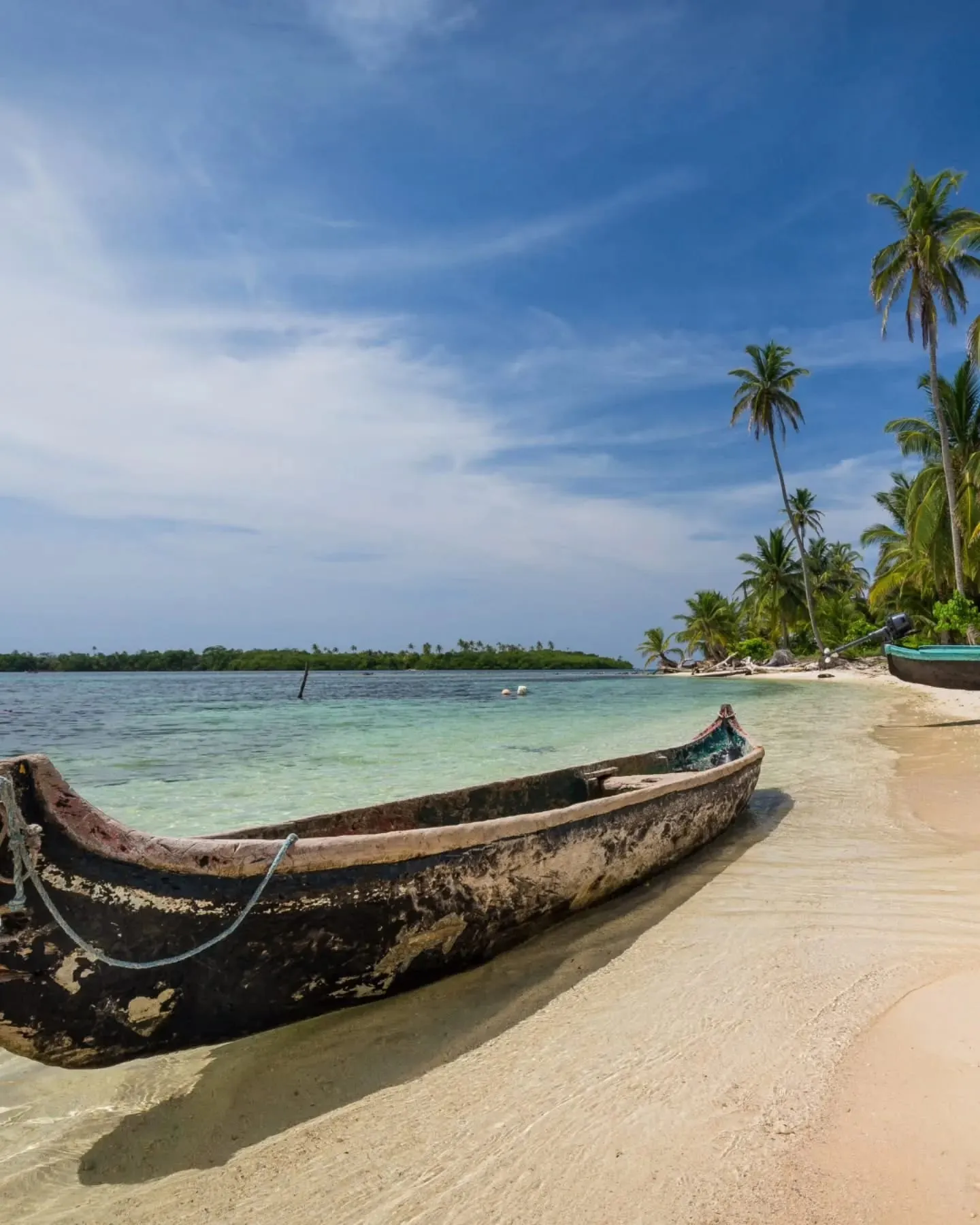
The canoe you see pulled up on the sand across Guna Yala is a dugout carved from a single log, called a cayuco in Panamanian Spanish and an ulu in the Guna language. The Guna use it every day to fish, cross to their mainland farms, fetch river water and haul building materials, by paddle or under a small sail.
Ulu: the word and the boat
In his 2003 sketch of the Guna language, the University of Texas linguist Joel Sherzer glosses «ulu» simply as canoe. «Cayuco» is the Panamanian Spanish word, and it’s the one you’ll hear from guides and boat drivers. The same word list holds two more terms that explain the rest of this article: demar, the sea, and diwar, the river.
If you’d like a few more to take with you, there’s a short Guna phrasebook for travellers.
One log, an axe and months of work
An ulu is made by hollowing out a whole trunk. According to sailor Fabio Brunazzi, who described the process in Small Boats magazine in 2018, the preferred wood is mahogany cut in the comarca’s forest. The rough shape is worked out right there in the jungle, then the inside is carved away until the canoe is light enough to carry without losing strength.
His account adds three details you can’t see from the outside:
- Water as treatment. The freshly carved hull is left submerged for a few days to drive out insects and pests, then dried, finished and painted.
- Carved skegs. Small fins are left in the wood at bow and stern so the canoe holds a straight line without a centreboard or rudder.
- Time. Brunazzi met a farmer who spent three months carving his own, alone, from a tree on his land, and then needed half the village to carry it to the water. A well-chosen log, he writes, gives a canoe that lasts more than twenty years.
The Encyclopedia of World Cultures entry on the Guna, written by anthropologist Karin E. Tice, puts it in one line: the men carve the canoes by hand, and learn that craft specifically.
What it’s used for, every day
Geography explains it. According to Tice, no inhabited island lies more than about a kilometre and a half from the coast, and the islands are sand and coral: almost no farmland and no fresh water. All of that is across the channel.
Anthropologist Mònica Martínez Mauri, of the University of Barcelona, spells it out in a 2015 paper in the journal Letras Verdes: from the mainland the Guna take crops, building materials, medicinal plants, game and fresh water, and that’s where they bury their dead. Yet most communities, 40 of 49 by her count, live on islands. The ulu links the two halves of the territory.
In practice that means:
- Going to the farm. The Guna cultivate plots in the mainland forest and get there by canoe, as described in Plants and Animals in the Life of the Kuna, by Jorge Ventocilla with Guna biologists Heraclio Herrera and Valerio Núñez.
- Fetching water. Mainland rivers supply water for drinking, bathing and washing, Tice notes. Brunazzi saw women paddling up a river for drinking water and to pick vegetables from their gardens.
- Fishing. This is the use you’ll notice most from a tour boat: cayucos sitting still near the reef.
- Building. Poles, cane and palm fronds come over from the mainland by cayuco. That’s how a traditional Guna house gets built.
Children, Brunazzi adds, start paddling at three or four.
Paddle and sail
For short hops a paddle is enough. Whoever steers uses a wider one, which Brunazzi records as cammi in Guna: it works as a rudder, correcting the course and pushing the bow round on every tack.
Longer ulus carry a mainsail held up by a diagonal spar, plus a small jib at the bow. Sails are made from whatever is at hand: bedsheets, plastic tarps, cloth recycled from visiting yachts. With that and the carved skegs, the canoe can work its way upwind.
Today they share the water with fibreglass boats with outboard engines, used for longer distances and for tourism. The boat on your tour, the one leaving from the Cartí port, is one of those. The cayuco is still the everyday vehicle.
Why you’ll see one on every island
On inhabited islands, the shoreline is the car park: according to Brunazzi, every family owns at least one canoe. On the uninhabited islands visited on tours you’ll often spot one too, because many of those islands have owners and coconut palms, and whoever comes to tend them arrives by cayuco. That’s the story behind who owns the coconuts on each island.
Three things to keep in mind:
- It isn’t a prop. A canoe on the beach is a family’s work tool. Don’t climb in or move it for a photo.
- If someone paddles up to your boat, it’s usually to sell fish, lobster or molas. Buying directly keeps the money in the community; for lobster, check when the closed season applies first.
- Ask before photographing people, just as on land. The photo and drone rules for the comarca are in Guna Yala’s rules for visitors.
If you’d like to see community life with someone who knows it, the Miryadup: Cultura Guna Express tour includes an inhabited island. For the wider picture, see our page on Guna Yala and its culture.
Frequently asked questions
What is a cayuco called in the Guna language? It’s called an ulu. Linguist Joel Sherzer records it that way in his 2003 description of the Guna language. «Cayuco» is the Panamanian Spanish name, and both refer to the canoe carved from a single log.
What wood is a Guna cayuco made from? According to sailor Fabio Brunazzi, who documented the building process in Small Boats magazine, the preferred wood is mahogany from the comarca’s forest. The log is hollowed out by hand, and a good one gives a canoe that lasts more than twenty years.
What do the Guna use cayucos for? For fishing, reaching their mainland farms, fetching river water and carrying building materials. The islands have almost no farmland or fresh water, so the canoe connects them with the coast, where all of that is.
Can I get into a cayuco on my tour? The cayucos you’ll see on the shore belong to Guna families and aren’t part of the tour. Don’t climb in or move one without the owner’s permission; if you’d like to go out in one, ask politely first.