By Ramiro Del Rio
12 Guna (Dulegaya) Words for Your Trip to San Blas
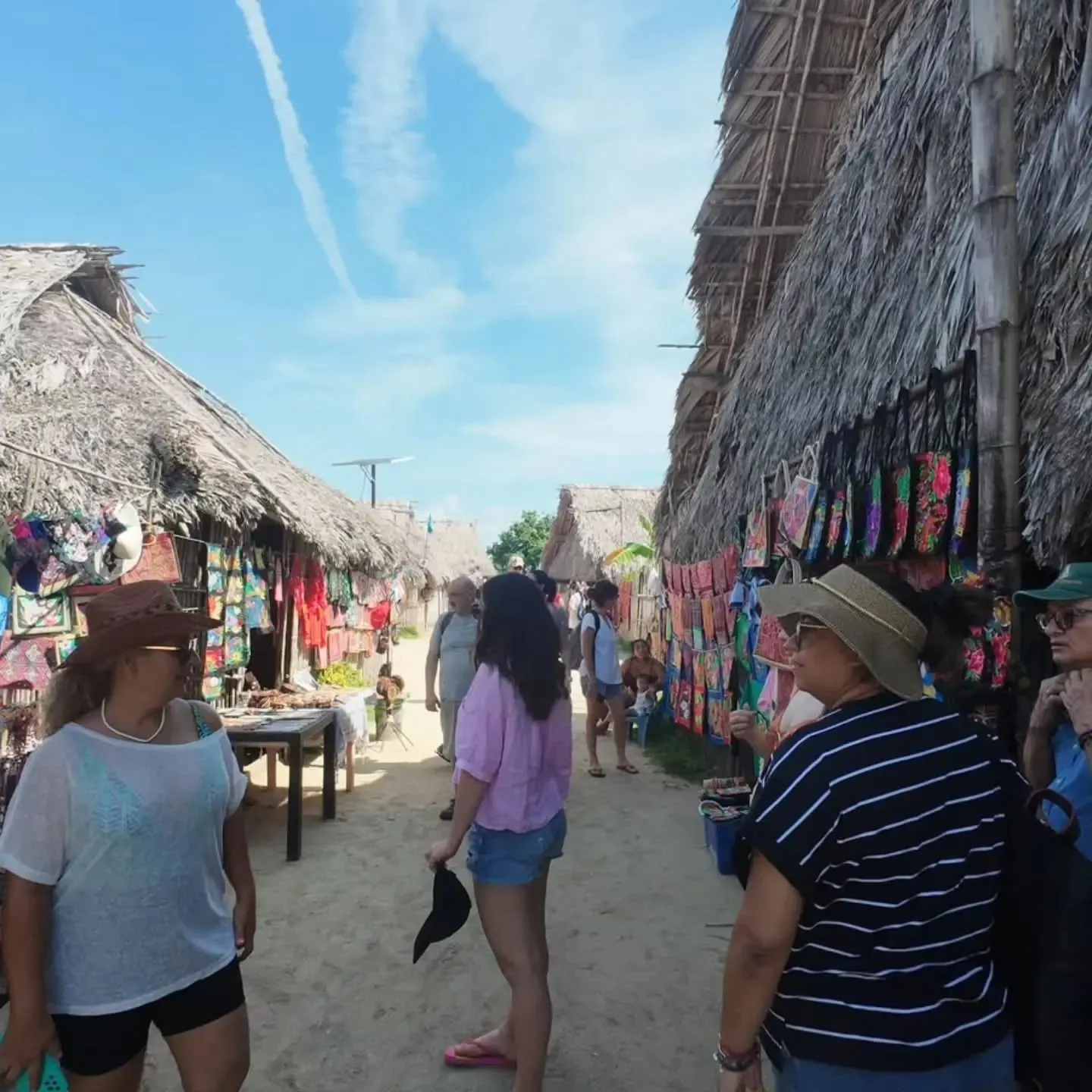
The Guna language is called Dulegaya, from dule (person) and gaya (mouth, language): the language of the people. A dozen words —naa to say hello, nuedi to say thank you, eye and mer for yes and no— change how a visit feels. Every word on this list comes from the school dictionary of the Guna General Congresses.
Where these words come from
Our source is gayamar sabga, the Guna–Spanish school dictionary compiled by Reuter Orán and Aiban Wagua for the Guna General Congresses’ intercultural bilingual education project. It was made by the Guna for their own schools, using the spelling they settled on themselves.
We have added nothing that is not in it, which means there are gaps. We did not find a word for “please” or a set phrase for “how much is it?” in the dictionary, and we would rather not make them up. For prices and bargaining, Spanish works: anthropologist James Howe notes that most Dulegaya speakers are fluent in it.
How to read them
Four rules from the dictionary itself will keep you close:
- Vowels sound as in Spanish, and the U is drawn out slightly.
- Stress always falls on the second-to-last syllable. That is why Dulegaya needs no accent marks.
- G and D at the start of a word sound strong, almost like K and T: guna is said close to “kuna” and dule close to “tule”. If you are curious why it is spelled that way, see where the names San Blas, Kuna Yala and Guna Yala come from.
- Many words have a short and a long form, both correct: nued and nuedi, mor and mola. An L between vowels can turn into an R, which is where the two versions come from.
Saying hello and goodbye
1. Naa / Anna / Degidde — Hello!, how’s it going? All three appear in the dictionary as greetings. Naa is the shortest and the easiest to remember as you step off the boat.
2. Nuedi (or nued) — Good, well; and also thank you The most useful word on the list. The dictionary glosses it as “excellent, good; thank you; kindly”. Use it to thank someone for lunch, for letting you take a photo or for showing you a mola. It also lists yeerba with the same sense of “good”.
3. Banmalo (or banemalo) — See you tomorrow! The goodbye for someone you will see again. On a day tour you will not need it much; when leaving an island, a nuedi does the job.
Yes, no, how many and where
4. Eye (or aye) — Yes, agreed
5. Mer (or melle) — No It also works as a negative particle inside a sentence.
6. Bigwa? / Melu? — How many? Careful: it means “how many?”, not “how much does it cost?”. Use it to ask how many molas, how many coconuts or how many people.
7. Bia? (or biali?) — Where?, which way? Handy for asking for the bathroom or the boat, with a gesture to help.
8. Ise — Not allowed This is the dictionary’s word for “not permitted”. If someone says it to you, respect it and don’t argue. Why communities decide over their own space is explained in who governs each island.
Words you will hear on the islands
9. Dule — Person What the Guna call themselves. The dictionary defines it as the term “the Guna use to describe themselves”. It appears in Dulegaya, in gunadule and in the name of the 1925 Dule Revolution.
10. Waga — Foreigner, non-Guna The word for someone from outside. The dictionary glosses it as “foreigner, non-Guna, non-Indigenous”. In other words: you, the moment you step off the boat.
11. Mola (or mor) — Clothing, cloth; woman’s blouse The word the world uses for the Guna textile means something broader in Dulegaya: “attire, clothing, dress, cloth; woman’s blouse”. To learn more about the art itself, read Guna culture and its molas.
12. Dub (or dubbu) — Island, islet Look at island names and you will see it everywhere: Gardi Sugdub, Wailidub, Nugnudub. If you visit Isla Wailidub, you now know where the end of its name comes from.
And one bonus word that explains the name of the place: yala, which the dictionary translates as “mountain; territory, region, comarca”. Gunayala is the territory of the Guna.
Frequently asked questions
How do you say thank you in Guna? According to the Guna General Congresses’ school dictionary, you say nuedi, or in its short form nued. The same word means “good” or “well”, so it works both to thank someone and to say you liked something.
How do you say hello in Guna? The dictionary lists three greetings: naa, anna and degidde, all equivalent to “hello!” or “how’s it going?”. Naa is the shortest and easiest to use.
What is the Guna language called? Dulegaya, from dule (person) and gaya (mouth, language). The congresses’ dictionary also calls it Gunagaya. Most of its speakers also speak Spanish.
Do I need to speak Guna to visit San Blas? No. According to anthropologist James Howe, most Guna speak Spanish fluently. A greeting and a nuedi are not required, but they are appreciated and they change the tone of a visit.