By Ramiro Del Rio
Why Every Coconut in San Blas Has an Owner
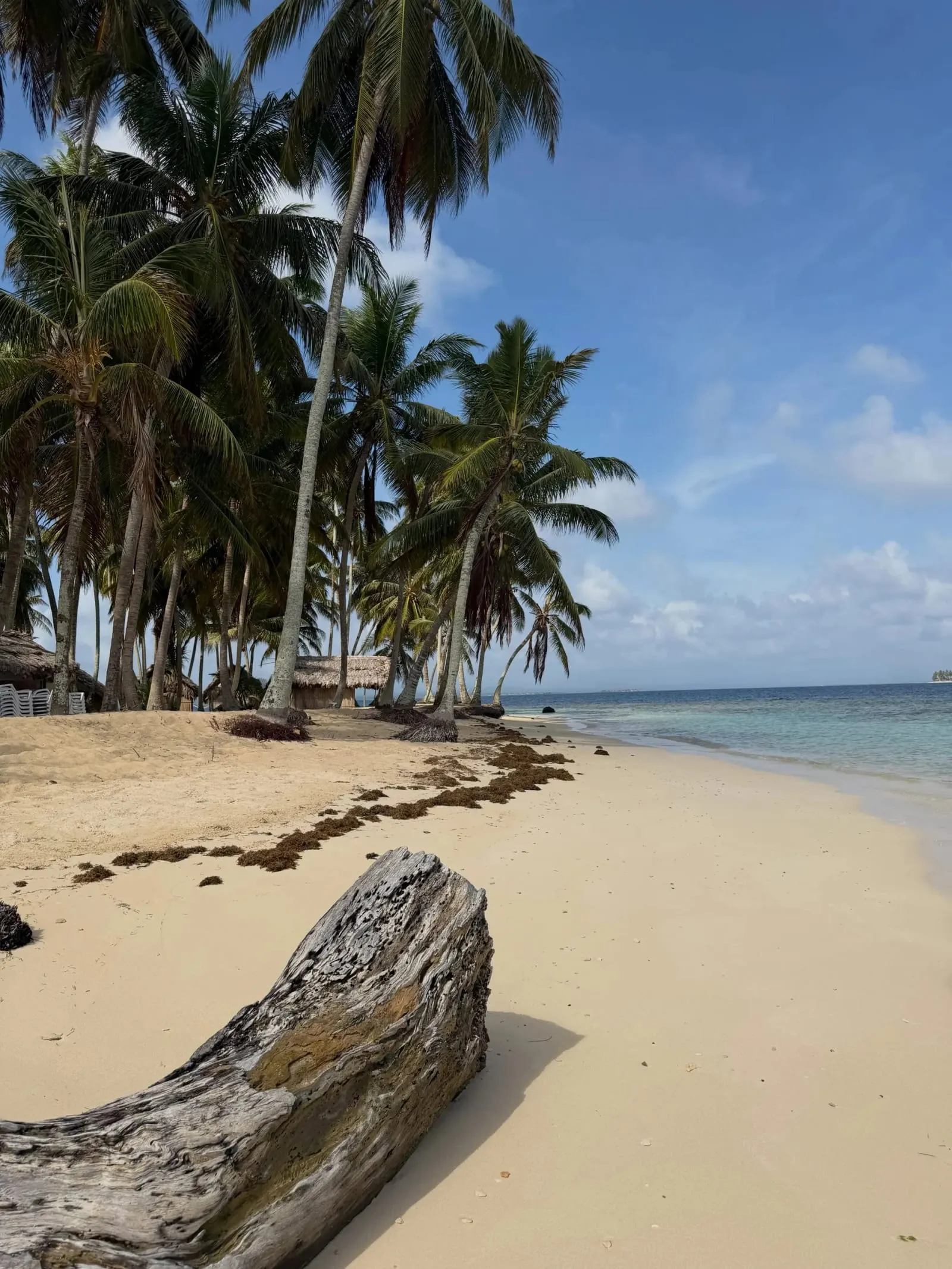
Every coconut palm in San Blas has an owner, even on a cay where nobody lives. Coconuts are a Guna family’s harvest and one of the comarca’s oldest sources of income, so you don’t pick them up or open them without permission. If you want one, you ask and you pay.
An empty cay is not an ownerless cay
From the beach, plenty of cays look like no man’s land: sand, palms and not a single house. They aren’t. According to the Encyclopedia of World Cultures, in its entry on the Guna people, coconut groves lie on the mainland coast or on uninhabited islands, and they belong either to an individual or to a group of relatives descended from a common ancestor who work them together.
Those rights are passed down through the generations, and the specific palm trees go with them. That’s how someone can know exactly whose each tree is on an islet where nobody sleeps. And it’s why a coconut lying on the sand is still someone’s harvest, even if you can’t see anyone around.
On top of that, the whole comarca has been collective Guna territory since 1938: no outsider can buy land there. We go into this when we look at how many islands there are and how many are inhabited.
The coconut economy
You’ll often hear that the coconut used to be “the currency” of San Blas. It’s more accurate to say that for generations it was the goods people paid with.
The same encyclopedia notes that the Guna have traded coconuts with Colombian boats since at least the late 19th century, exchanging them for sugar, rice, cocoa or cash. For a long time, coconut exports to Colombia were the comarca’s most common source of cash income. Today they share that role with molas and lobster — which has its own calendar, as we explain in the months when lobster is off the menu.
Guna researcher Geodisio Castillo describes how, in the mid-20th century, buying coconuts for cash began to replace barter inside the comarca. Coconuts went from being swapped for goods to being sold for dollars, and many families shifted their planting towards them.
One detail says a lot about how it works: according to the encyclopedia, men and women both plant, weed and harvest, but it is usually the women of each household who handle the exchange — selling the coconuts or trading them for goods.
Why you don’t take or open one without asking
Taking a coconut in San Blas isn’t like picking up a shell. You’re taking part of what a family sells or trades for rice, sugar and everything else the island doesn’t produce. One coconut seems like nothing. Multiply it by every visitor who passes through a cay in a day and it stops being nothing.
There’s also a simpler matter of respect: you’re in another people’s territory, with its own rules, and decisions about the land and what it yields aren’t the visitor’s to make. Those rules are set by the comarca’s authorities, not by your tour operator; to see how, read who is in charge in Guna Yala and how decisions are made.
In practice, that means:
- Don’t climb the palms or shake them to bring coconuts down.
- Don’t pick up the ones on the ground, however abandoned they look.
- Don’t crack them open with rocks or machetes you find on the island.
- Don’t pack dried coconuts in your suitcase as a souvenir.
How to buy a coconut
On islands that receive visitors, it’s common for someone from the family that looks after the island to sell coconuts for drinking. Just ask.
- Ask whoever runs the island or whoever is working in the kitchen. If they don’t sell them, they’ll tell you.
- Bring cash in small notes. There are no ATMs or card machines on the islands, and a large note may not have change.
- Let them open it. They do it with a machete and with a skill that isn’t worth trying to copy.
- Ask before taking the husk with you or leaving it anywhere: there’s no rubbish collection on the islands.
A “thank you” in their own language goes a long way; pick up a couple of expressions in Guna words that will come in handy on your trip. And if you’d like to see community life up close, beyond the beach cays, the Miryadup: Cultura Guna Express tour includes that visit. For the wider picture, our page on the Guna Yala comarca explains what its autonomy means day to day.
Frequently asked questions
Can you pick coconuts in San Blas? Not without permission. Every coconut palm belongs to a Guna family, even on uninhabited cays, and the coconuts are part of their income. If you want one, ask whoever runs the island and buy it.
Who owns the coconuts on an uninhabited island? An individual or a family group that inherits the rights to those palms. The fact that nobody lives on the cay doesn’t mean it has no owner.
Was the coconut really used as money in San Blas? More than money, it was the goods people paid with. The Guna have traded coconuts with Colombian boats since the late 19th century, in exchange for sugar, rice, cocoa or cash.
How do I buy a coconut in San Blas? Ask the family that runs the island or whoever is working in the kitchen, and pay in cash with small notes. They’ll open it for you; it’s not worth trying yourself.